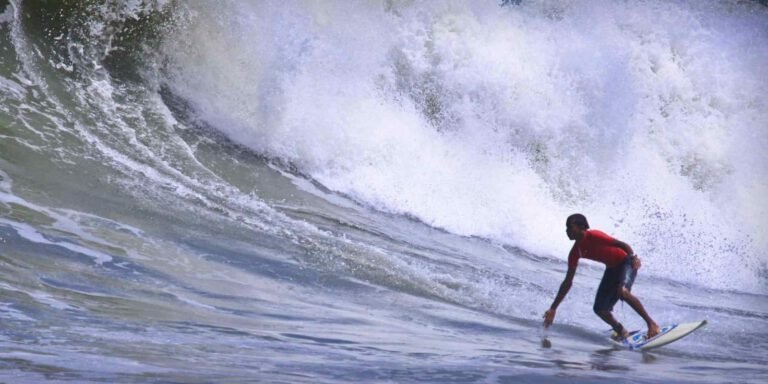
Indian Surfing Steps Onto the Asian Games Stage
A young national squad, stronger coastal communities and more international exposure are pushing Indian surfing into a new phase.
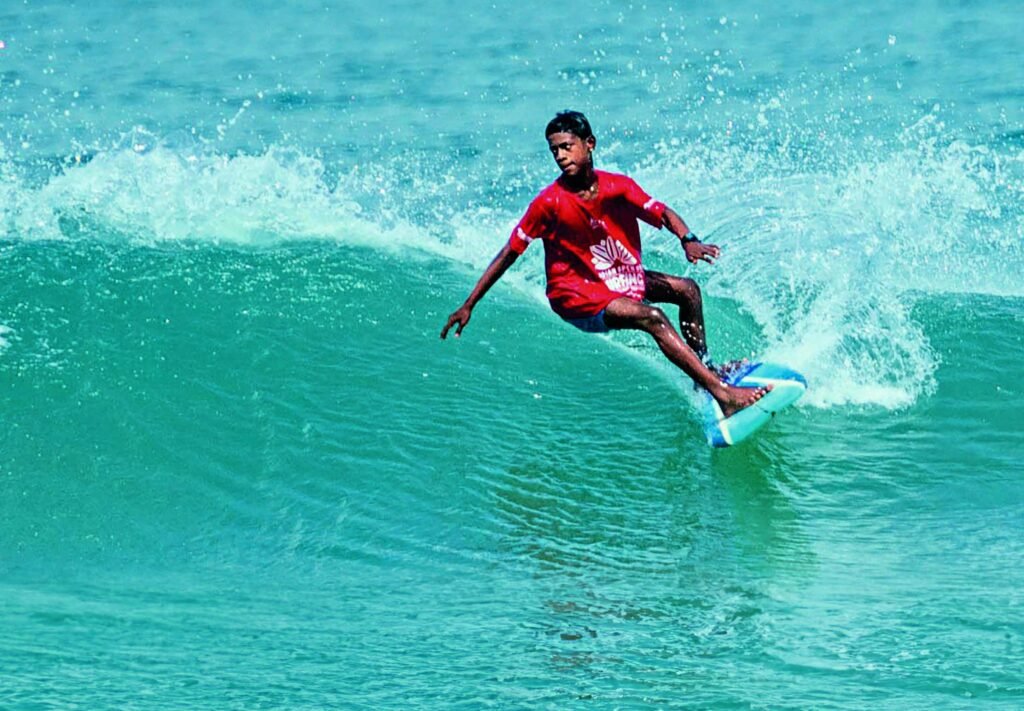
Indian surfing is moving into a new phase. What began in small coastal communities, surf clubs and borrowed boards is now producing athletes who are travelling, competing internationally and preparing to represent India on one of Asia's biggest sporting stages.
At the 2026 Indian Open of Surfing on Tannirbhavi Beach in Mangaluru, more than 50 surfers competed with an unusually clear target in front of them: selection for the Asian Games in Japan. The final squad named by the Surfing Federation of India brought together four surfers from different parts of the country: Kishore Kumar, Sivaraj Babu, Kamali Moorthy and Sugar Shanthi Banarse.
A squad shaped by India's coastal surf communities
The four names are important, but so is where they come from. Competitive surfing in India is still young and heavily concentrated along the southern coastline, where small communities have built the sport session by session. Tamil Nadu has produced several of the country's strongest competitors, while Karnataka, Kerala and Goa continue to develop their own competitive and recreational surf scenes.
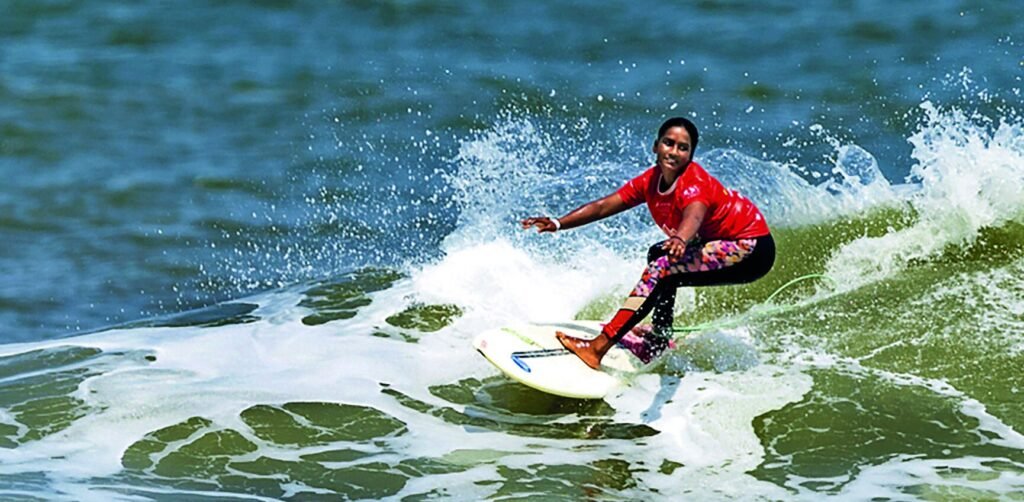
Kamali Moorthy, from Mahabalipuram, began surfing as a child and has grown into one of the country's most visible young competitors. Goa's Sugar Shanthi Banarse represents another part of the story: a women's surf scene that remains small, but is gaining visibility, confidence and a clearer pathway into competition.
From Mulki to the national stage
India's modern surfing story is closely tied to the west coast. Jack Hebner, better known as Surfing Swami, helped introduce surfing to a generation of young people and established Mantra Surf Club in Mulki in 2004. Members of that early community later helped form the Surfing Federation of India in 2011.
- 2004: Mantra Surf Club is established in Mulki, Karnataka.
- 2011: The Surfing Federation of India is formed.
- 2016: The first Indian Open of Surfing is held at Sasihitlu.
- 2021: Surfing appears at the Olympics for the first time.
- 2025: SFI receives formal recognition from the Ministry of Youth Affairs & Sports, and Ramesh Budihal wins bronze at the Asian Surfing Championships.
- 2026: India selects its first squad for surfing's Asian Games debut in Japan.
That timeline is short for a competitive sport. It also explains why every major result matters. India is not working with generations of professional surf infrastructure; it is building the system while athletes are already trying to compete within it.
The bigger challenge is exposure
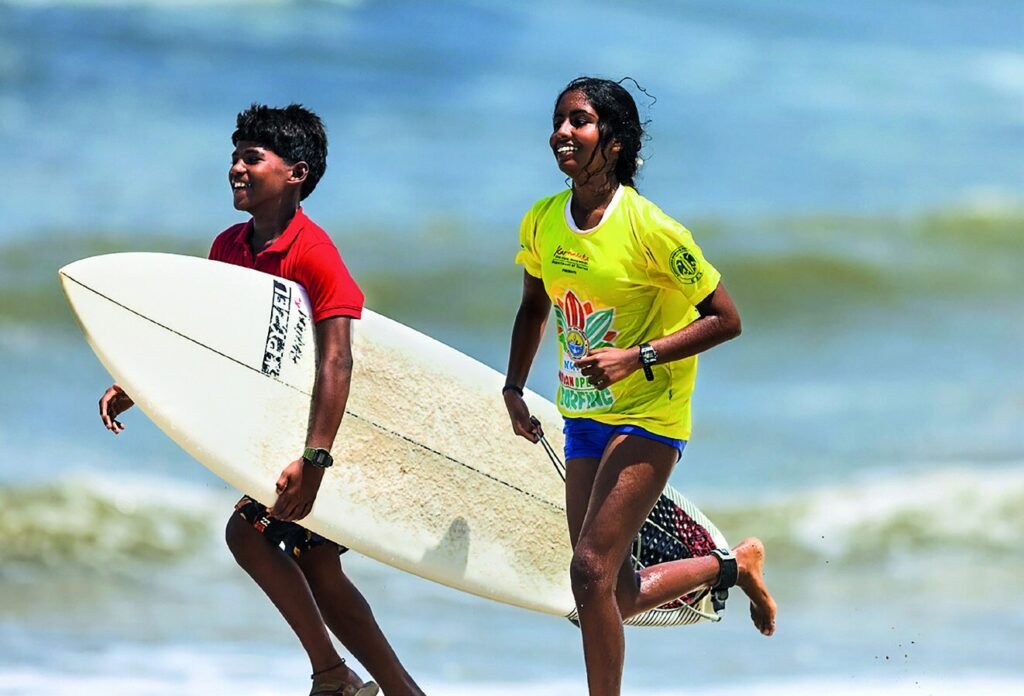
Talent is only one part of the equation. Competitive surfers need access to different wave conditions, stronger opponents, reliable equipment and enough time in the water to adapt. Much of the equipment used in India is imported, and young surfers often begin on borrowed or shared boards from surf schools and clubs.
“Talent is here, what we are doing is giving them exposure.”
Rammohan Paranjape, Vice President, Surfing Federation of India
That exposure is beginning to happen more consistently. Indian surfers are travelling to training camps and competitions in places such as Bali, Sri Lanka, Australia, Taiwan and the Maldives. The value is not only in contest results. Surfing different breaks and watching higher-level surfers at close range accelerates learning in a way that familiar home waves cannot always provide.
Why the women's squad matters
The Asian Games also gives women's surfing in India something it badly needs: visibility. The competitive field remains small, and families can still be hesitant about daughters taking up the sport because of fears around injury, drowning, appearance and time spent in the sun.
Seeing Indian women compete internationally changes the picture. It makes surfing easier to imagine not just as a beach activity, but as a sport with progression, coaching, competition and a genuine place for women in the water.
What comes next for Indian surfing
The Asian Games will not solve the structural challenges around equipment, coaching access, travel or consistent waves. But it gives the sport a larger stage and gives younger surfers a clearer destination to aim for.
The most encouraging part of the current moment is that India's surf story is no longer centred on a single beach or a single generation. New surfers are coming through in Tamil Nadu, Karnataka, Kerala, Goa and beyond. Some will want competition. Many will simply discover the feeling that drew the first surf communities into the water in the first place.
Curious about getting into the water yourself? Explore Makai Surf Courses.
Source note: This Makai blog article is an original summary and editorial adaptation based on reporting by Suhani Singh for India Today, issue dated 31 August 2026. The photographs reproduced with this article are the actual photographs supplied in that feature and carry the printed credit Praveen Jayakaran / Surfing Swami Foundation. Read the original India Today story.